
Coil
The conductive winding at the heart of the transformer's energy conversion.
Definition
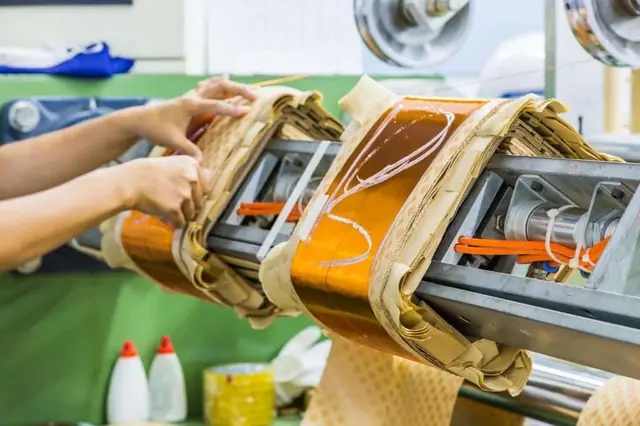
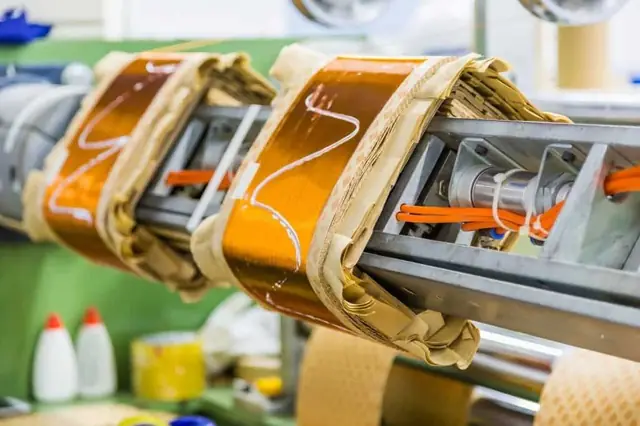
A coil, in the context of electrical transformers, is a conductive winding — generally copper or aluminium — wound around a magnetic core. It is what carries out the energy conversion through electromagnetic induction.
Every transformer has at least two coils: the primary, connected to the source, and the secondary, connected to the load. When alternating current flows through the primary coil, it creates a varying magnetic flux in the core, which in turn induces a voltage in the secondary coil according to Faraday’s law.
The quality of the winding — regularity of the turns, conductor quality, applied mechanical tension and inter-layer insulation — largely determines the thermal, acoustic and electrical performance of the transformer.
The ABL tip
At ABL Transfo, windings are made of high-purity electrolytic copper. A carefully executed winding reduces Joule losses, extends service life and minimises heating under overload. For damp or aggressive environments, we offer coils with vacuum impregnation.