

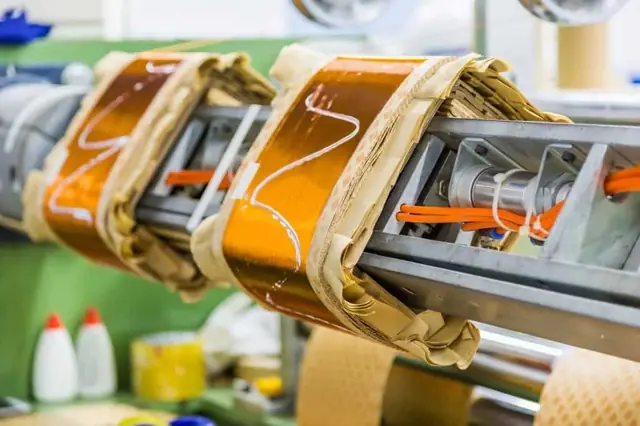
Made in Gailhan (Gard, France) since 1993
Single-phase transformers
From 230 V or 400 V to 12, 24, 48, 110, 230 or 400 V: our single-phase transformers range from 63 VA to 20 kVA, open frame, covered or sealed. Wound and 100 % tested in our Gailhan workshop, with prices shown online.
- 63 VA → 20 kVAstandard range
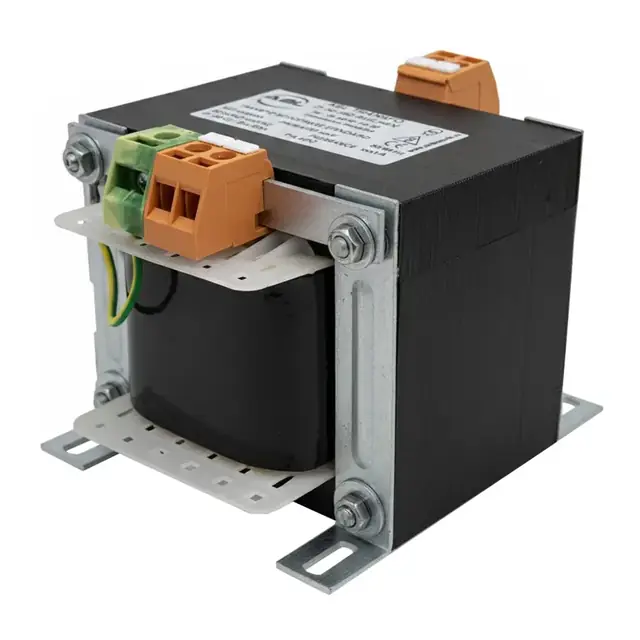
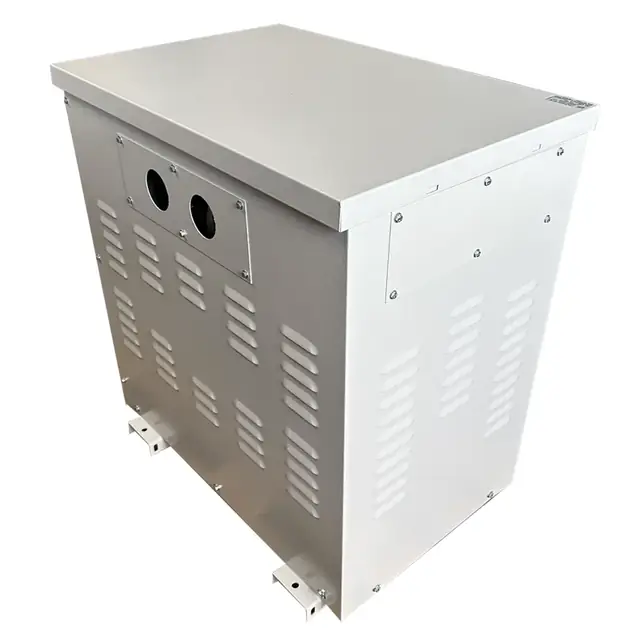
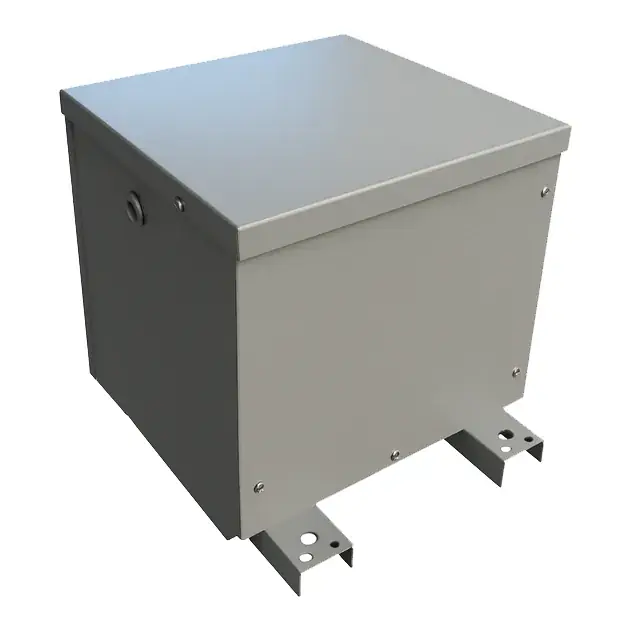
- IP00 · IP23 · IP54open frame, covered, sealed
- 12 → 400 V13 voltage pairs
- 2-year warrantywound and tested in Gailhan
- 100 % tested before shipping
- Shipped within 24 to 48 hours
- Datasheet and wiring diagram
- Secure payment: card, PayPal or bank transfer
Which voltage?
Your supply voltage, then your equipment voltage: only the right models remain.
14 results
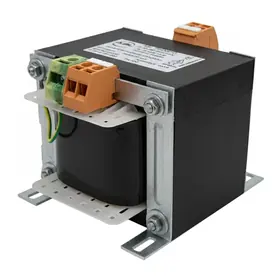 Input230 VOutput24 V
Single-phase transformer 230 V / 24 V
Automation, gates, control circuits, 24 V lighting
Choose the ratingfrom €47.42 ex VAT€56.90 inc VAT
4.9 (11 reviews)- Input230 VOutput12 V
Single-phase transformer 230 V / 12 V
Halogen lighting, pool lights, 12 V AC equipment
Choose the ratingfrom €47.42 ex VAT€56.90 inc VAT
4.9 (16 reviews) - Input230 VOutput230 VIsolation
Single-phase isolation transformer 230 V / 230 V
Galvanic isolation to protect equipment or people
Choose the ratingfrom €47.42 ex VAT€56.90 inc VAT
4.9 (35 reviews) - Input400 VOutput230 V
Single-phase transformer 400 V / 230 V
230 V from two phases of a 400 V supply
Choose the ratingfrom €47.42 ex VAT€56.90 inc VAT
5.0 (4 reviews) - Input400 VOutput24 V
Single-phase transformer 400 V / 24 V
24 V control circuits on a 400 V installation
Choose the ratingfrom €47.42 ex VAT€56.90 inc VAT
5.0 (1 review) - Input230 VOutput48 V
Single-phase transformer 230 V / 48 V
48 V AC equipment and circuits
Choose the ratingfrom €47.42 ex VAT€56.90 inc VAT
5.0 (1 review) - Input230 VOutput96 V
Single-phase transformer 230 V / 96 V
96 V AC equipment and circuits
Choose the ratingfrom €47.42 ex VAT€56.90 inc VAT
- Input230 VOutput110 V
Single-phase transformer 230 V / 110 V
Equipment designed for 110–115 V AC
Choose the ratingfrom €47.42 ex VAT€56.90 inc VAT
5.0 (5 reviews) - Input110 VOutput230 V
Single-phase transformer 110 V / 230 V
A 230 V appliance on a 110–120 V supply
Choose the ratingfrom €47.42 ex VAT€56.90 inc VAT
- Input230 VOutput400 V
Single-phase transformer 230 V / 400 V
A single-phase 400 V appliance supplied from 230 V
Choose the ratingfrom €47.42 ex VAT€56.90 inc VAT
5.0 (1 review) - Input230 / 400 VOutput2 × 12 VDual voltage
Single-phase transformer 230-400 V / 2 × 12 V
230 V or 400 V primary, two 12 V secondaries
Choose the ratingfrom €47.42 ex VAT€56.90 inc VAT
- Input230 / 400 VOutput2 × 24 VDual voltage
Single-phase transformer 230-400 V / 2 × 24 V
230 V or 400 V primary, two 24 V secondaries
Choose the ratingfrom €47.42 ex VAT€56.90 inc VAT
5.0 (2 reviews) - Input230 / 400 VOutput2 × 115 VDual voltage
Single-phase transformer 230-400 V / 2 × 115 V
230 V or 400 V primary, two 115 V secondaries
Choose the ratingfrom €47.42 ex VAT€56.90 inc VAT
5.0 (1 review) 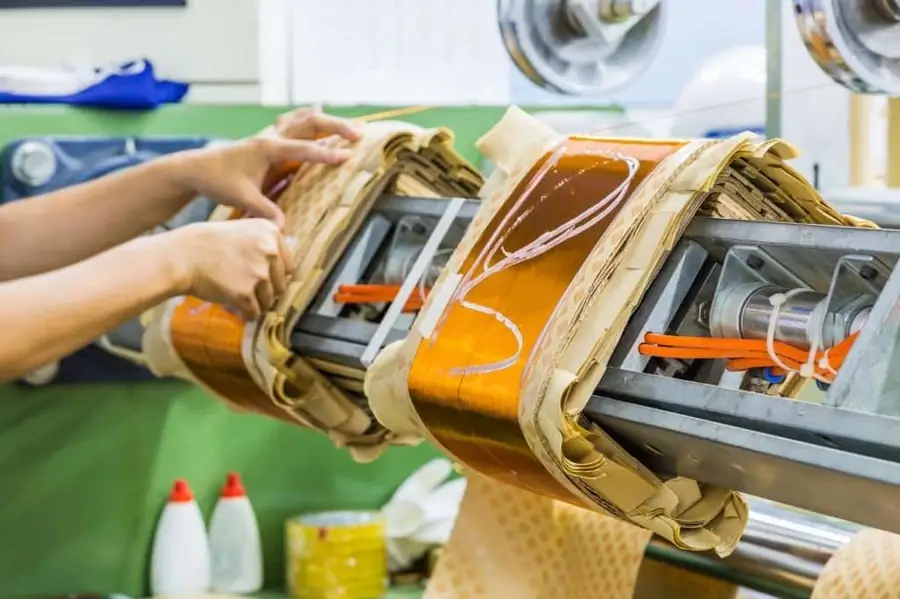 Inputyour choiceOutputyour choice
Your voltage is not listed?
Custom single-phase: you choose the input voltage, the output voltage and the rating; we wind it in Gailhan.
Configure minefrom €47.42 ex VAT€56.90 inc VAT
No product matches these criteria.
Price excluding VAT for the smallest rating (63 VA), in IP00; the price of each rating and protection is shown on the product page.
How to choose: Single-Phase Transformers
Which voltage?
Input: 230 V between phase and neutral, or 400 V between two phases. Output: the AC voltage marked on your equipment's rating plate.
Choosing the voltageWhich rating?
Add up the power of the equipment to be supplied, multiply by 1.25 and choose the next rating up.
The sizing ruleOpen frame, covered or sealed?
IP00 for a cabinet, IP23 with a ventilated cover for a dry room, IP54 in a moulded housing or sealed enclosure for sheltered outdoor use.
IP protection ratings
Custom-built
Can’t find your voltage or rating?
We wind your custom single-phase transformer in our Gailhan workshop: input voltage, output voltage, rating, protection.
Good to know
Our range: 13 standard models, from 12 V to 400 V
A single-phase transformer changes the voltage of a single-phase AC supply: it steps 230 V down to 24 V for a gate motor, steps 230 V up to 400 V for a machine, or separates two circuits at the same voltage. We make 13 standard models, from 63 VA to 20 kVA, plus a custom model for every other voltage. Each product page shows the price for every rating and every IP rating.
230 V primary
- 230 V to 24 V transformer: gate motors, solenoid valves, control circuits, 24 V lighting.
- 230 V to 12 V transformer: halogen lamps, swimming pool lights, 12 V AC equipment.
- 230 V to 48 V transformer and 230 V to 96 V: equipment and circuits supplied at 48 V or 96 V AC.
- 220 V to 110 V transformer: a 110–115 V American appliance on 230 V mains.
- 230 V to 230 V isolation transformer: the same voltage, with no electrical connection to the mains.
- 230 V to 400 V transformer: a 400 V single-phase appliance supplied from a 230 V socket.
400 V, 110 V or dual-voltage primary
- 400 V to 230 V transformer: 230 V taken between two phases of a 400 V supply, with no neutral.
- 400 V to 24 V transformer: 24 V control circuits on a 400 V installation.
- 110 V to 230 V transformer: a European appliance on a 110–120 V supply, in the United States or Canada.
- 230 V or 400 V primary with two secondaries: 2 × 12 V, 2 × 24 V or 2 × 115 V.
Need a different input or output voltage? The custom single-phase transformer is configured online, from 63 VA to 20 kVA, with an instant price.
What is a single-phase transformer?
A single-phase transformer, also called a monophase transformer, is an electrical device that converts one AC voltage into another, lower or higher, without changing the frequency. The current flowing through the primary winding creates a magnetic flux in the laminated core; this flux induces a voltage in the secondary winding. The turns ratio of the two windings sets the voltage ratio: that is what makes a 230 V / 24 V transformer a step-down transformer, and a 230 V / 400 V transformer a step-up transformer.
In our single-phase transformers, the primary and secondary are two separate windings: there is no electrical connection between the input and output voltages. That is the difference from an autotransformer, which has only one winding, and from a three-phase transformer, which works on all three phases of a 400 V supply and covers the highest ratings.
A transformer always delivers alternating current. If your equipment's rating plate says “DC” or shows the direct-current symbol, you need a power supply, not a transformer.
How to choose: voltage, rating and enclosure
Input voltage
On a household socket or circuit, the supply is 230 V between phase and neutral. In continental Europe it used to be called 220 V, so a 220 V transformer and a 230 V transformer connect to the same mains. In an industrial cabinet with no neutral, the primary can be connected between two phases of the three-phase supply, at 400 V: that is the job of the 400 V / 230 V and 400 V / 24 V models, and of the dual-voltage 230 V / 400 V models.
Output voltage
It is marked on the rating plate of the equipment to be supplied: “24 V AC”, “24 VAC” or “24 V ~” calls for a 24 V transformer. For American equipment, allow for 110 to 120 V and check that it accepts 50 Hz: a transformer does not change the frequency. Our single-phase transformers work on both 50 Hz and 60 Hz supplies.
Power rating
Add up the power of all the equipment to be supplied, multiply by 1.25 and choose the next rating up. A 200 W gate motor needs 250 VA; 1,200 W of equipment needs 1,500 VA, so a 1.6 kVA transformer. The range runs from the small 63 VA transformer to the 20 kVA single-phase power transformer.
IP rating
IP00: an open-frame transformer, to be installed in a closed cabinet or enclosure. IP23: supplied with a ventilated cover, for a dry room. IP54: protected against dust and splashing water, in a moulded housing up to 630 VA and a sealed enclosure above that, for sheltered outdoor use. Full details are on our IP and IK protection ratings page.
Wiring and protecting a single-phase transformer
The most common connection is between phase and neutral, on a 230 V supply. In a cabinet fed from a three-phase supply with no neutral, the primary is connected between two phases, at 400 V. In both cases, the earth conductor goes to the transformer's earth terminal. Connection must be made with the power off, by a qualified person.
Screw terminals are fitted up to 55 A; above that, the connection is made with cable lugs. The terminal marking and wiring diagram of each model are on its datasheet.
On the primary side, fit an aM fuse or a type D circuit breaker: at switch-on, a transformer draws a high inrush current, which a fast-acting fuse or a type B circuit breaker cannot withstand. On the secondary side, each outgoing circuit has its own protection, rated for the output current. The recommended fuse and breaker ratings for each size are given on the product pages. At extra-low voltage the current is high: work out the cable cross-section needed at the transformer output before running the cable.
Gates, control, lighting, machinery: typical applications
- Automation and gates: 24 V AC gate and roller shutter motors, irrigation solenoid valves, door strikes and intercoms. See our transformers for gates.
- Control circuits: relay and contactor coils, control panel automation, at 24 V, 48 V or 230 V. See our control transformers.
- Low-voltage lighting: 12 V or 24 V AC halogen lamps and spotlights. See our lighting transformers.
- Safety extra-low voltage: fairground rides, damp locations, circuits accessible to touch. See our safety transformers.
- Circuit separation: creating an isolated 230 V supply, eliminating an earth loop. See our isolation transformers.
- Machinery and imported equipment: running 110 V equipment in Europe, or the reverse, through a transformer with separate windings.
Standards: EN 61558-2-4 and EN 61558-2-6
Our single-phase transformers come under the EN 61558 standard. Part 2-4 covers isolating transformers, which is where our single-phase isolation transformers belong: on these models, an earthed electrostatic shield is fitted as standard between primary and secondary. Part 2-6 covers safety isolating transformers, which deliver a safety extra-low voltage (SELV) of no more than 50 V: this applies to our 12 V and 24 V models. Thermal protection can be added on request.
Wound and 100 % tested in our Gailhan workshop
ABL Transfo has been manufacturing transformers since 1993 in its workshop in Gailhan, in the Gard, between Nîmes and Montpellier in southern France. Every single-phase transformer is wound, wired and tested there before it leaves, and comes with a 2-year warranty. Standard models are dispatched from France within 24 to 48 hours, on a pallet for the higher ratings.
Electricians, integrators and industrial buyers: a trade account shows prices excluding VAT and gives an immediate 5 % discount across the whole site.
Another voltage? The custom-built single-phase model
If the voltage pair you need is not available as a standard model, configure a custom single-phase transformer: input and output voltages, number of secondaries, rating from 63 VA to 20 kVA, IP rating. The price is shown immediately, and manufacturing takes from 48 h to one week depending on the rating. For special requirements, our team replies with a quote within 48 h. For higher ratings or three-phase supplies, see our three-phase transformers and our full range of custom-built transformers.
By voltage: 230 V to 12 V transformers and 230 V to 24 V transformers.
Frequently asked questions
What is the difference between a single-phase and a three-phase transformer?
A single-phase transformer works on one phase: it connects between phase and neutral at 230 V, or between two phases at 400 V, and our range goes up to 20 kVA. A three-phase transformer works on all three phases of a 400 V supply and covers the highest ratings: up to 100 kVA with prices online, and up to 1,000 kVA on request.
Can a transformer convert single-phase to three-phase?
No: a transformer changes the voltage, not the number of phases. A 230 V / 400 V transformer gives single-phase 400 V, not three-phase. To run a three-phase machine on a single-phase supply, you need a phase converter. The reverse, taking single-phase 230 V from a 400 V three-phase supply, is done with a transformer: see the three-phase to single-phase transformer in our three-phase range.
How do I choose the rating of a single-phase transformer?
Add up the power of the equipment to be supplied, multiply by 1.25 and choose the next rating up. Example: 1,200 W of equipment needs 1,500 VA, so a 1.6 kVA transformer.
220 V or 230 V transformer: what is the difference?
None: 220 V is the former name for the 230 V mains in continental Europe. A 220 V / 24 V transformer and a 230 V / 24 V transformer connect to the same mains and give the same output voltage.
Can I run a 110 V appliance on 230 V mains?
Yes, with a step-down transformer such as our 220 V to 110 V model: add up the appliance's power, multiply by 1.25 and choose the next rating up. Check that the appliance accepts 50 Hz, because a transformer does not change the frequency.
Does a single-phase transformer output DC?
No, it delivers alternating current at the same frequency as the mains. For equipment marked “DC” (LED strips, electronics, batteries), you need a DC power supply.
How much does a single-phase transformer cost?
The price of a single-phase transformer depends on its power rating and IP rating. Each product page shows the price of every rating and every version, and a trade account shows prices excluding VAT with a 5 % discount.
What protection should I fit on a single-phase transformer?
On the primary, an aM fuse or a type D circuit breaker, which withstands the inrush current at switch-on. On the secondary, protection rated for the output current. The recommended fuse and breaker ratings for each size are on the product pages.