


Made in Gailhan (Gard, France) since 1993
Electric gate transformers
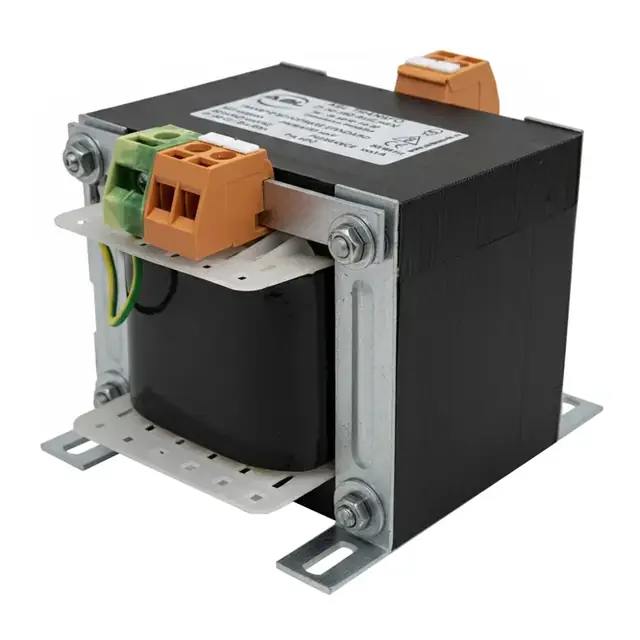
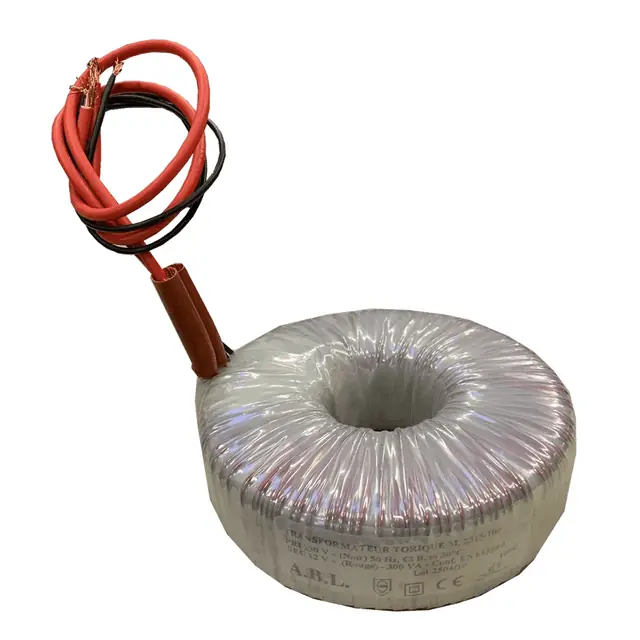
Transformers for gate and garage door motors, at 24 V or 12 V AC: conventional from 63 VA to 20 kVA, or toroidal from 50 VA to 2 kVA. Prices shown online; standard models dispatched from France within 24 to 48 hours.
- 24 V · 12 VAC
- 63 VA → 20 kVAconventional, IP00 to IP54
- 50 VA → 2 kVAtoroidal, compact
- 2-year warrantyconventional and toroidal
- 100 % tested before shipping
- Shipped within 24 to 48 hours
- Quote within 48 hours
- Secure payment: card, PayPal or bank transfer
Which voltage?
Choose your equipment voltage: only the right models remain.
8 results
 Input230 VOutput24 V
Single-phase transformer 230 V / 24 V
Automation, gates, control circuits, 24 V lighting
Choose the ratingfrom €47.42 ex VAT€56.90 inc VAT
4.9 (11 reviews)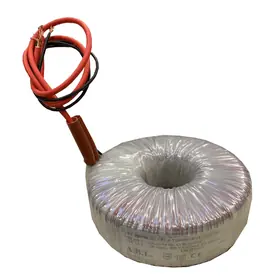 Input230 VOutput12 V
Toroidal transformer 230 V / 12 V
Halogen lamps, 12 V pool lights, 12 V AC equipment
Choose the ratingfrom €36.32 ex VAT€43.58 inc VAT
4.9 (52 reviews)- Input230 VOutput24 V
Toroidal transformer 230 V / 24 V
Low-voltage lighting and 24 V AC equipment
Choose the ratingfrom €36.32 ex VAT€43.58 inc VAT
5.0 (29 reviews) - Input230 VOutput12 V
Single-phase transformer 230 V / 12 V
Halogen lighting, pool lights, 12 V AC equipment
Choose the ratingfrom €47.42 ex VAT€56.90 inc VAT
4.9 (16 reviews) - Input230 VOutput2 × 12 V
Toroidal transformer 230 V / 2 × 12 V
Two 12 V secondary windings
Choose the ratingfrom €36.32 ex VAT€43.58 inc VAT
5.0 (4 reviews) - Input230 VOutput110 V
Single-phase transformer 230 V / 110 V
Equipment designed for 110–115 V AC
Choose the ratingfrom €47.42 ex VAT€56.90 inc VAT
5.0 (5 reviews) - Input230 / 400 VOutput2 × 115 VDual voltage
Single-phase transformer 230-400 V / 2 × 115 V
230 V or 400 V primary, two 115 V secondaries
Choose the ratingfrom €47.42 ex VAT€56.90 inc VAT
5.0 (1 review)  Inputyour choiceOutputyour choice
Your voltage is not listed?
Single-phase or three-phase, we wind it to order in Gailhan: send your voltages and rating, quote within 48 hours.
Request a quote
No product matches these criteria.
Price excluding VAT for the lowest-priced version; the price of each version is shown on the product page.
How to choose: Transformers for gates
Which voltage?
Check the label on the original transformer or the gate motor's instructions: “24 V AC” calls for a 24 V transformer. If it says “DC”, you need a DC power supply.
Choosing the voltageWhich power rating?
The power of the motor and accessories × 1.25, then the next rating up: a 200 W motor needs 250 VA.
The sizing ruleConventional or toroidal?
A toroid is more compact and is fixed with a single centre bolt; a conventional transformer is also available with a cover or in a sealed housing.
Our toroidal transformers
Custom-built
Can’t find your voltage or rating?
We wind your custom transformer in our Gailhan workshop: input voltage, output voltage, rating, protection.
Good to know
Our electric gate transformers
Most motors for gates, sliding gates and garage doors run at extra-low voltage: an electric gate transformer steps the 230 V mains down to 24 V or 12 V AC to supply them. Here are our models, with a price shown for every power rating:
- 230 V / 24 V transformer, from 63 VA to 20 kVA, open frame (IP00), with a cover (IP23) or sealed (IP54): the model for gate motors running on 24 V AC.
- 230 V / 24 V toroidal transformer, from 50 to 2,000 VA: more compact, for a motor control box with little room to spare.
- 230 V / 12 V transformer, 230 V / 12 V toroidal transformer and 2 × 12 V toroidal transformer: automation and lighting at 12 V.
- 220 V / 110 V transformer and 230 / 400 V to 2 × 115 V transformer: equipment running on 110 to 115 V.
12 V or 24 V: which voltage for a gate motor?
The voltage is written on the label of the original transformer, on the control board or in the gate opener's instructions. “24 V AC”, “24 VAC” or “24 V ~” calls for a 24 V AC gate transformer; “12 V AC” calls for a 12 V transformer. If the motor runs on direct current (“24 V DC”, “24 VDC”), it needs a 230 V / 24 V DC power supply, not a transformer.
24 V AC is also used by electric door strikes, intercoms, irrigation solenoid valves and roller shutter motors: the same transformer often supplies several of these devices.
Sizing a gate motor transformer
Add up the power of the motor and of the accessories it supplies (flashing light, lighting, electric strike), multiply by 1.25 and choose the next rating up. A 200 W gate motor needs 250 VA. When fitting a replacement transformer for a gate motor, keep the same voltage and choose a power rating at least equal to the one shown on the old transformer's label.
Installation: enclosure, cable and protection
- Where to install it: open frame (IP00) inside the motor's control box or another closed enclosure; with a ventilated cover (IP23) in a dry room; in a moulded housing or a sealed enclosure (IP54) for sheltered outdoor use.
- The cable: at 24 V, the current is almost ten times higher than at 230 V. Over 25 m, 10 A already needs 10 mm² cable to keep the voltage drop below 5 %: work out the cable size before you run the cable.
- Protection: on the 230 V side, an aM fuse or a type D circuit breaker for a conventional transformer, and a time-lag fuse (T) or a type D circuit breaker for a toroidal transformer; on the secondary side, protection rated for the output current.
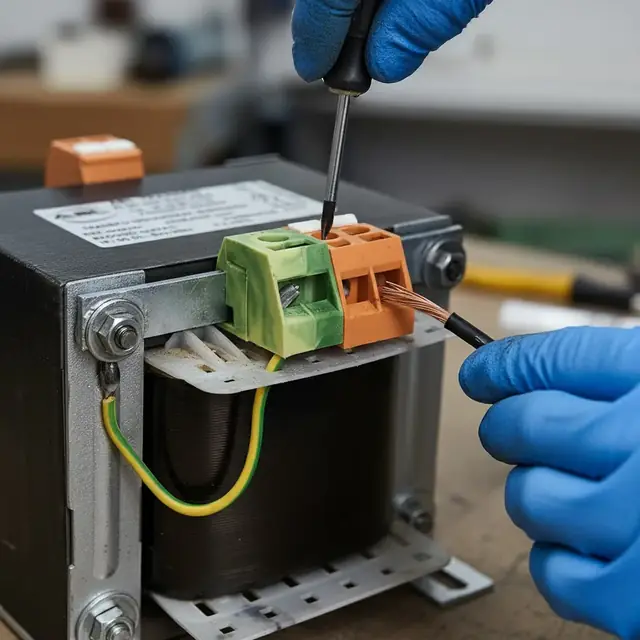
- Connection: with the power off, by a qualified person.
Conventional or toroidal gate transformer?
The conventional transformer ranges from 63 VA to 20 kVA and comes open frame, with a cover or sealed. The toroidal transformer ranges from 50 VA to 2 kVA: more compact, lighter and quieter, it is fixed with a single centre bolt. Both are wound and tested in our workshop in Gailhan (Gard, southern France) and carry a 2-year warranty. For larger control circuits, see also our control transformers and our safety transformers.
Ordering, delivery and custom-built models
Standard models are dispatched from France within 24 to 48 hours, and each product page shows the price of every rating and every version. Installers and automation specialists: a trade account shows prices excluding VAT, with an immediate 5 % discount. For another voltage, the custom single-phase transformer is configured online; for a part number you cannot find, request a quote and we will reply within 48 hours.
Frequently asked questions
Which electric gate transformer do I need?
One with the voltage stated for the gate motor, most often 24 V AC: a 230 V / 24 V transformer, conventional or toroidal, rated at the power of the motor and its accessories multiplied by 1.25.
Does my gate motor need a 12 V or a 24 V transformer?
The motor decides: check the label on the original transformer or the instructions. “24 V AC” calls for a 24 V transformer, “12 V AC” for a 12 V one.
My gate motor runs on 24 V DC: will a transformer do?
No: a transformer delivers alternating current. A motor marked “24 V DC” needs a 230 V / 24 V DC power supply.
What size of transformer does a gate motor need?
The power of the motor and accessories × 1.25, then the next rating up: a 200 W gate motor needs 250 VA.
How do I replace the transformer on my gate motor?
Note the voltage and power rating on the old transformer's label, and the space available in the control box. Choose the same voltage and at least the same power rating; a toroidal transformer is more compact. The replacement is done with the power off, by a qualified person.
Which transformer for a garage door motor?
The same as for a gate motor: most garage door motors run at extra-low voltage, 24 V or 12 V AC. Read the voltage on the label or in the instructions, then size the transformer at the power of the motor and accessories × 1.25.
What cable size do I need at 24 V?
It depends on the current and the length: at 24 V, a 1 V drop is already 4 %. For example, 10 A over 25 m needs 10 mm² cable to stay below 5 %.