

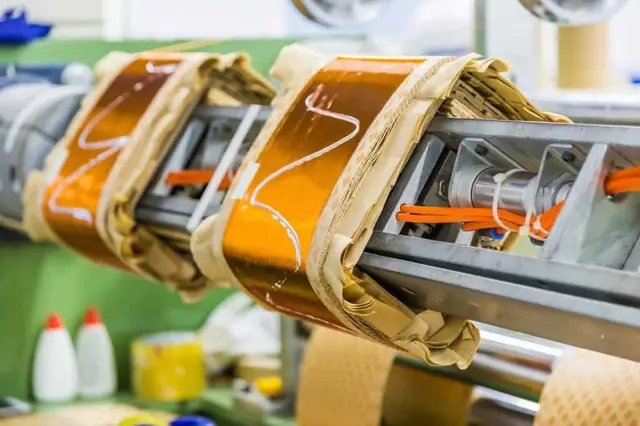
Manufacturer in Gailhan (Gard, France) since 1993
Isolation transformers
Single-phase isolation transformers from 63 VA to 20 kVA and three-phase models from 1 to 100 kVA: separate primary and secondary windings, electrostatic shield as standard, EN 61558-2-4. Wound and tested in our workshop in Gailhan, France, with prices shown online.
- 63 VA → 20 kVAsingle-phase
- 1 → 100 kVAthree-phase, Dyn11
- Electrostatic shieldas standard, connected to earth
- EN 61558-2-4isolating transformers
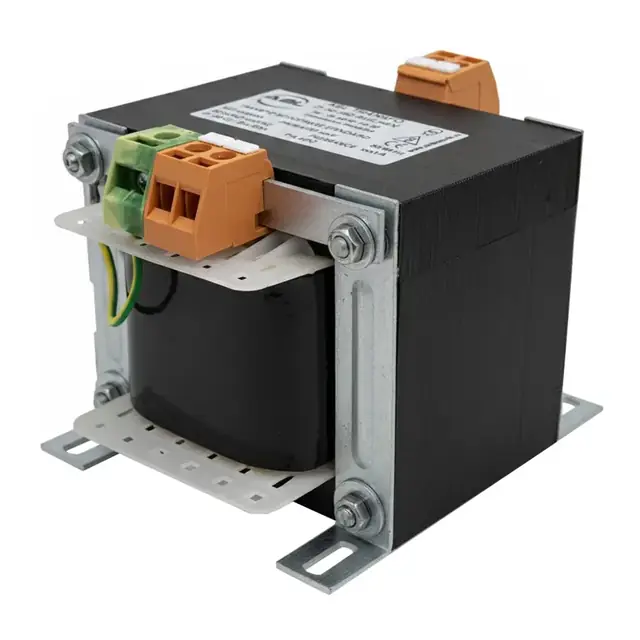
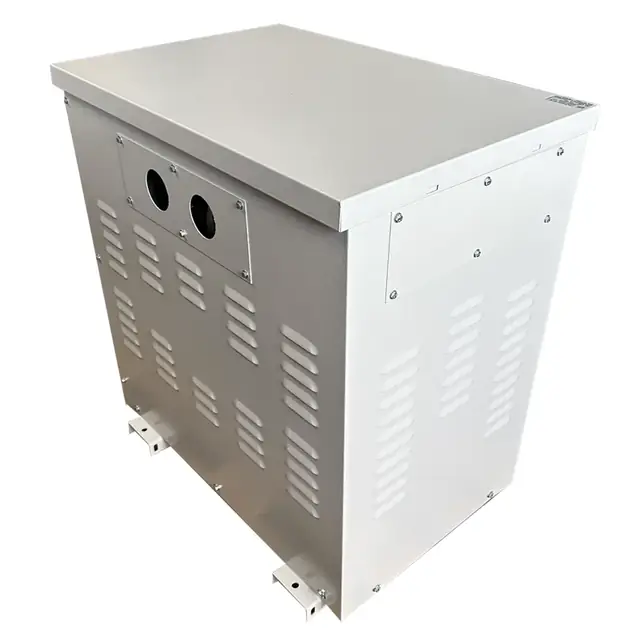
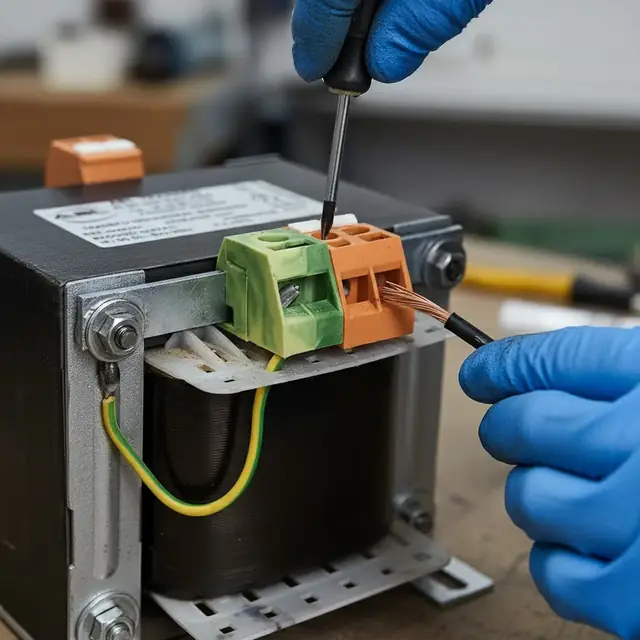
- 100 % tested before shipping
- Shipped within 24 to 48 hours
- Quote within 48 hours
- Secure payment: card, PayPal or bank transfer
Which voltage?
Your supply voltage, then your equipment voltage: only the right models remain.
9 results
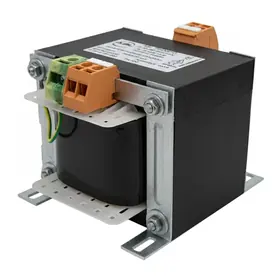 Input230 VOutput230 VIsolation
Single-phase isolation transformer 230 V / 230 V
Galvanic isolation to protect equipment or people
Choose the ratingfrom €47.42 ex VAT€56.90 inc VAT
4.9 (35 reviews)- Input400 VOutput230 V
Single-phase transformer 400 V / 230 V
230 V from two phases of a 400 V supply
Choose the ratingfrom €47.42 ex VAT€56.90 inc VAT
5.0 (4 reviews) 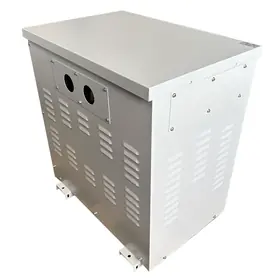 Input3 × 400 VOutput3 × 400 V + NIsolation
Three-phase isolation transformer 400 V / 400 V + N
Isolate a 400 V installation and create a neutral
Choose the ratingfrom €295.75 ex VAT€354.90 inc VAT
4.8 (6 reviews)- Input230 VOutput110 V
Single-phase transformer 230 V / 110 V
Equipment designed for 110–115 V AC
Choose the ratingfrom €47.42 ex VAT€56.90 inc VAT
5.0 (5 reviews) - Input110 VOutput230 V
Single-phase transformer 110 V / 230 V
A 230 V appliance on a 110–120 V supply
Choose the ratingfrom €47.42 ex VAT€56.90 inc VAT
- Input230 VOutput400 V
Single-phase transformer 230 V / 400 V
A single-phase 400 V appliance supplied from 230 V
Choose the ratingfrom €47.42 ex VAT€56.90 inc VAT
5.0 (1 review) - Input3 × 690 VOutput3 × 400 V + NIsolation
Three-phase isolation transformer 690 V / 400 V + N
400 V equipment on a 690 V industrial supply
Choose the ratingfrom €295.75 ex VAT€354.90 inc VAT
- Input3 × 400 VOutput3 × 690 V + NIsolation
Three-phase isolation transformer 400 V / 690 V + N
690 V motors and drives on a site supplied at 400 V
Choose the ratingfrom €295.75 ex VAT€354.90 inc VAT
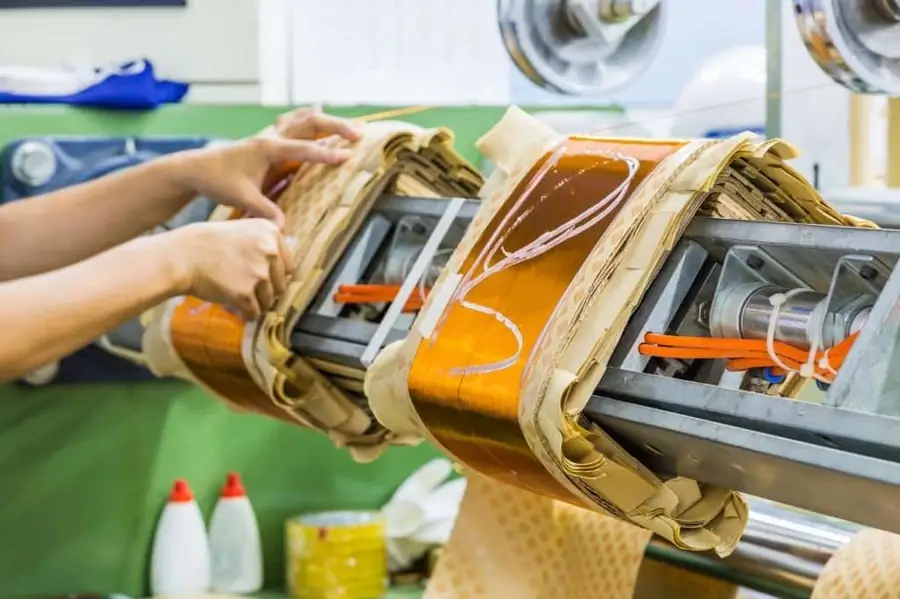 Inputyour choiceOutputyour choice
Your voltage is not listed?
Single-phase or three-phase, we wind it to order in Gailhan: send your voltages and rating, quote within 48 hours.
Request a quote
No product matches these criteria.
Price excluding VAT for the lowest-priced version; the price of each version is shown on the product page.
How to choose: Isolation transformers
Same voltage or not?
An isolation transformer can keep the voltage (230 V / 230 V, 400 V / 400 V + N) or change it while isolating: 400 V / 230 V, 230 V / 115 V, 110 V / 230 V.
See the rangeSingle-phase or three-phase?
One appliance or a boiler: a single-phase 230 V / 230 V model. A three-phase machine or cabinet, or a neutral to create: a three-phase 400 V / 400 V + N model.
How to chooseWhich power rating?
Single-phase: total power of the equipment × 1.25, then the next rating up. Three-phase: current per phase × line-to-line voltage × √3.
The sizing rule
Custom-built
Can’t find your voltage or rating?
We wind your custom transformer in our Gailhan workshop: input voltage, output voltage, rating, protection.
Good to know
Our isolation transformers, single-phase and three-phase
An isolation transformer electrically separates the installation it supplies from the mains that feeds it. We manufacture them in single-phase, from 63 VA to 20 kVA, and in three-phase, from 1 to 100 kVA, with a price shown online for every power rating.
Single-phase isolation transformers, 63 VA to 20 kVA
- 230 V / 230 V isolation transformer: for a boiler, audio equipment, a repair bench or a machine, with a 1:1 ratio. It suits UK mains, whose nominal voltage is 230 V, often still called 240 V.
- 400 V / 230 V transformer: connected between two phases of a 400 V supply, it provides an isolated 230 V output with no need for a neutral.
- 220 V / 110 V transformer: an isolated 115 V supply for equipment designed for 110 to 120 V.
- 110 V / 230 V transformer: isolated 220 V on a 110 V network, 230 V on a 120 V network.
- 230 V / 400 V transformer: an isolated single-phase 400 V supply from 230 V.
Three-phase isolation transformers, 1 to 100 kVA
- 3-phase isolation transformer, 400 V / 400 V + N: isolates an installation and creates a neutral, with 230 V between each phase and neutral.
- Other voltages, up to 1,000 V between phases, are available on request.
- Our other three-phase transformers with separate windings (400 V / 230 V, 230 V / 400 V, 230 V / 230 V, 208 V) are isolation transformers too: see our three-phase transformers.
What is an isolation transformer?
In an isolation transformer, the primary and secondary are two separate windings with no electrical connection between them: energy is transferred through the magnetic core, not through a conductor. This is called galvanic isolation. The EN 61558-2-4 standard uses the term isolating transformer: isolation transformer and isolating transformer are two names for the same device.
It can keep the same voltage, like the 230 V / 230 V model, or change it: a 400 V / 230 V or 230 V / 115 V transformer also isolates its secondary from the mains. On all our isolation transformers, an earthed electrostatic shield is fitted as standard between primary and secondary: it limits the transfer of interference from one side to the other.
What is an isolating transformer used for?
It protects against faults carried over from the mains and lets you choose the earthing arrangement on the secondary side, TN-S or IT for example:
- Electrical separation: with the secondary left unearthed, a first earth fault does not cause a dangerous current to flow.
- Earth-referenced neutral: one secondary terminal connected to earth becomes a neutral, with no voltage between neutral and earth. This is the solution for boiler control boards that monitor the flame relative to neutral and earth.
- Audio and hi-fi: breaking earth loops and cutting noise carried by the mains.
- Machinery and control systems: when their leakage currents trip the RCD.
- Creating a neutral in three-phase: the 400 V / 400 V + N model in vector group Dyn11 recreates a 3 × 400 V + N network on an installation without a neutral.
An EN 61558-2-4 isolation transformer is not suitable for medical locations: these require transformers complying with EN 61558-2-15, with reinforced insulation and limited leakage currents.
How to choose the right model
Single-phase or three-phase
For an appliance, a boiler, an audio rack or a single-phase machine: a single-phase isolation transformer, usually 230 V / 230 V. For a three-phase cabinet or machine, or to create a neutral: a three-phase isolation transformer in vector group Dyn11, with the neutral brought out on the secondary.
Power rating
In single-phase, add up the power of the equipment to be supplied, multiply by 1.25 and choose the next rating up: a 150 W boiler needs 188 VA, so a 200 VA model; a circuit protected at 16 A represents 3,680 VA at 230 V, so a 4 kVA model. In three-phase, multiply the current per phase by the line-to-line voltage and by √3, divide by 1,000 and choose the next standard rating up.
IP rating
IP00 open frame, for cabinet mounting; IP23 with a ventilated cover, for a dry room; IP54, protected against dust and splashing water. See our page on IP and IK protection ratings.
Protection
On the primary side, an aM fuse or a type D circuit breaker, both of which withstand the inrush current at switch-on; on the secondary side, protection rated for the output current. The recommended ratings are given on each product page.
Standards: EN 61558-2-4, and 2-6 for extra-low voltage
Our isolation transformers come under EN 61558-2-4, which covers isolating transformers; our three-phase models come under EN IEC 61558-1 and EN IEC 61558-2-4. For a safety extra-low voltage (SELV, 50 V maximum), Part 2-6 applies, the part covering safety isolating transformers: see our safety transformers. Thermal protection can be added on request.
Wound and tested in our workshop in Gailhan
ABL Transfo has been manufacturing transformers since 1993 in Gailhan, in the Gard (southern France). Every isolation transformer is wound, wired and 100 % tested there before it leaves. Standard single-phase models are dispatched from France within 24 to 48 hours and carry a 2-year warranty; three-phase models, built to order, leave the workshop within 3 working days from 1 to 50 kVA and within 6 working days from 63 to 100 kVA, and carry a 5-year warranty. With a trade account, prices are shown excluding VAT, with an immediate 5 % discount.
Another voltage, or more than 100 kVA?
For a voltage that is not available as a standard model, configure a custom single-phase transformer or a custom three-phase transformer, with its price shown online. Above 100 kVA, up to 1,000 kVA, we manufacture on request: request a quote and we will reply within 48 hours.
Frequently asked questions
What is an isolation transformer used for?
To separate a piece of equipment or an installation electrically from the supply that feeds it: the primary and secondary have no electrical connection. It protects against faults carried over from the mains and lets you choose the earthing arrangement on the secondary, for example to give a boiler an earth-referenced neutral.
Isolation transformer or isolating transformer: what is the difference?
None: they are two names for the same device, and the EN 61558-2-4 standard uses the term isolating transformer. A safety isolating transformer is covered by another part, EN 61558-2-6: it delivers a safety extra-low voltage (SELV) of 50 V maximum.
Do you make a 240 V isolation transformer for UK mains?
Yes: the nominal voltage of UK mains is 230 V, often still called 240 V, and our 230 V models suit it. For a 240 V to 240 V isolation transformer, choose the 230 V / 230 V model.
Should the secondary be connected to earth?
It depends on the application. Left unearthed, the secondary provides electrical separation: a first earth fault does not cause a dangerous current to flow. With one terminal connected to earth, it gives an earth-referenced neutral, with no voltage between neutral and earth, as some boiler control boards require.
Can an isolation transformer be used in medical locations?
No: medical locations require transformers complying with EN 61558-2-15, with reinforced insulation and limited leakage currents.
What size of isolation transformer do I need?
In single-phase, the total power of the equipment × 1.25, then the next rating up: a 150 W boiler needs a 200 VA model, a circuit protected at 16 A a 4 kVA model. In three-phase: current per phase × line-to-line voltage × √3 ÷ 1,000, then the next standard rating up.
How much does an isolation transformer cost?
The price of an isolation transformer depends on its power rating and version. Each product page shows the price of every rating and every version, from 63 VA to 20 kVA in single-phase and from 1 to 100 kVA in three-phase; above 100 kVA, up to 1,000 kVA, the price is given on quotation. A trade account shows prices excluding VAT, with a 5 % discount.
How do I create a neutral with a three-phase isolation transformer?
With a 400 V / 400 V + N model in vector group Dyn11: delta primary, star secondary with the neutral brought out. It keeps 400 V between phases and gives 230 V between each phase and neutral.