

Mobile and off-grid power
DC/AC Converters – Pure Sine Wave Inverters to 230 V
Turn the power of a 12 V, 24 V or 48 V battery into 230 V AC with a pure sine wave inverter: 350 to 3,500 W for vans, boats and off-grid sites, safe for electronics and motors.
- 12 · 24 · 48 Vbattery input voltages
- 350 → 3,500 Wratings across the three ranges
- 230 V pure sinemains-quality output
- €142.60ex VAT, starting price
- Shipped from France
- Secure payment: card, PayPal or bank transfer
- Trade account: 5 % off the whole site
- Advice Monday to Friday, 8 am to 6 pm
The products
3 results
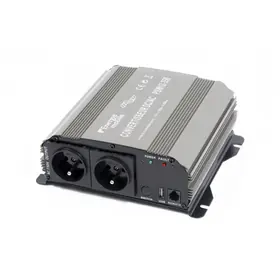 Input12 / 24 V DCOutput230 V ACPure sine wave
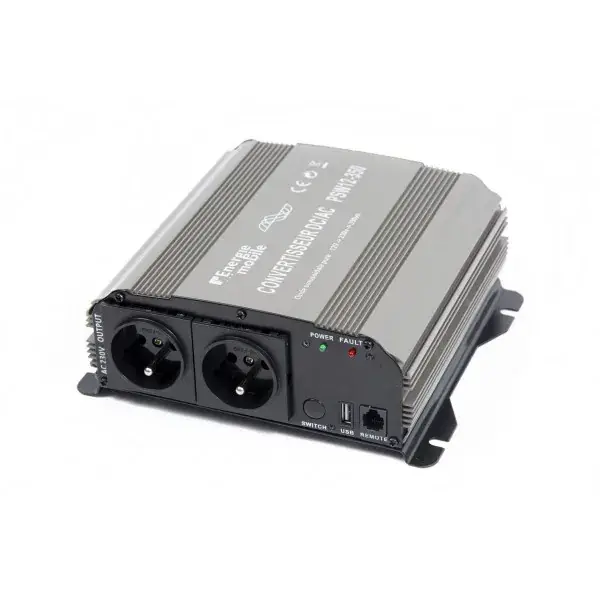
Pure sine wave inverter 12 / 24 V DC / 230 V AC
Mains-quality voltage, for sensitive equipment
Choose the ratingfrom €142.60 ex VAT€171.12 inc VAT
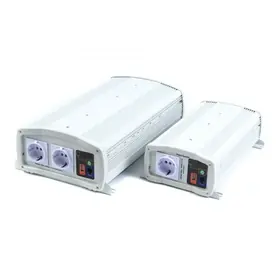 Input12 V DCOutput230 V ACPure sine wave
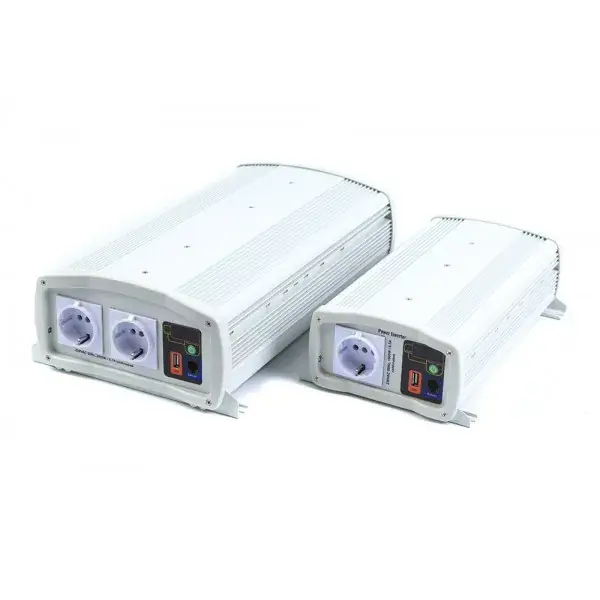
PRO pure sine wave inverter 12 V DC / 230 V AC
Heavy-duty use: vans, boats, off-grid sites
Choose the ratingfrom €269.90 ex VAT€323.88 inc VAT
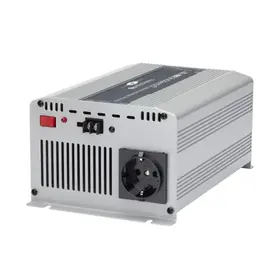 Input12 / 24 / 48 V DCOutput230 V ACPure sine wave
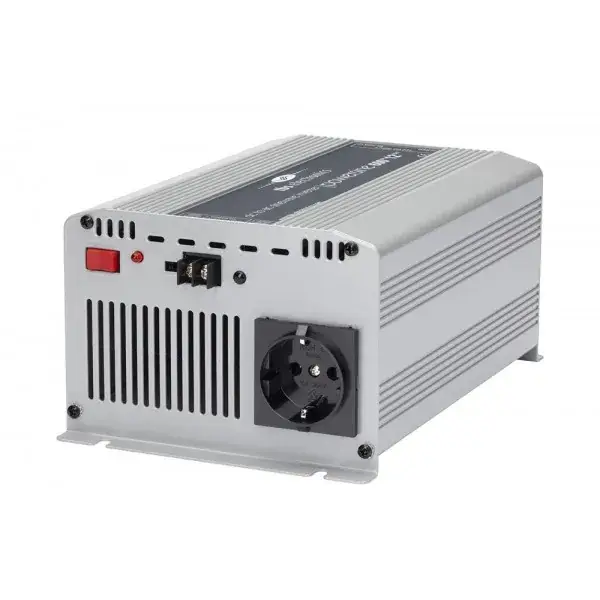
ULTRA pure sine wave inverter 12 / 24 / 48 V DC
Solar installations, converted vehicles, marine
Choose the ratingfrom €231.52 ex VAT€277.82 inc VAT
No product matches these criteria.
Price excluding VAT for the lowest-priced version; the price of each version is shown on the product page.
How to choose: DC/AC Converters
Why pure sine?
A pure sine wave reproduces mains power: safe for electronics, fridges, pumps and compressors.
Sine inverter, 12 or 24 VWhat rating?
Add up the loads running together × 1.25, and allow for motor start-up peaks.
Sine PRO, up to 3,000 W12, 24 or 48 V?
The input voltage must match your battery bank.
Sine ULTRA, 12/24/48 V
Advice
Need advice before ordering?
Our technicians answer Monday to Friday, 8 am to 6 pm, by phone or e-mail.
Good to know
Why choose a pure sine wave inverter?
A DC to AC converter, usually called an inverter, turns the direct current of a battery into 230 V alternating current, just like a mains socket. The shape of the output wave is what matters.
A pure sine wave inverter reproduces the mains waveform. It is the right choice for sensitive electronics (computers, televisions, routers, medical equipment, chargers) and for motors: fridges, pumps and compressors start without abnormal heating or hum. Cheaper modified sine wave inverters are only suited to resistive loads and simple motors, which is why all three of our ranges are pure sine:
- Sine: 12 V or 24 V input, 350, 700, 1,100 and 1,600 W;
- Sine PRO: 12 V input, 600, 1,000, 2,000 and 3,000 W, built for intensive use in work vans, boats, food trucks and remote sites;
- Sine ULTRA: 12 V, 24 V or 48 V input, from 350 up to 3,500 W depending on the voltage.
12 V to 230 V or 12 V to 240 V? Mains voltage in the UK and across Europe is nominally 230 V, even though 240 V is still often quoted in the UK; our inverters deliver 230 V.
What power rating do you need?
Add up the power of the appliances that will run at the same time (it is on their rating plate), then allow 25% headroom: total power × 1.25. For motors and compressors, check the start-up peak, which can reach three times the rated power; it often determines the inverter size.
Example: 400 W of appliances used together × 1.25 = 500 W, so a 600 W model is suitable as long as no motor has to start.
12 V, 24 V or 48 V input?
Choose the inverter to match the voltage of your battery bank: 12 V for most light vehicles and converted vans, 24 V for trucks and many marine or solar installations, 48 V for larger solar systems. For the same power, a higher voltage means a lower current: 1,000 W needs at least 83 A at 12 V, 42 A at 24 V and 21 A at 48 V (before inverter losses), which means thinner cables and lower line losses.
- 12 V battery: all three ranges, including the Sine PRO up to 3,000 W.
- 24 V battery: a 24 V inverter from the Sine range (350 to 1,600 W) or the Sine ULTRA.
- 48 V battery: Sine ULTRA, up to 3,500 W.
Installation and protection
Fit the inverter as close to the batteries as possible, in a dry and ventilated place, with short cables sized for the current, and protect the battery line with a fuse or circuit breaker rated for the input current. Each range has its own built-in protection:
- Sine: overload, overheating, reverse polarity, low battery;
- Sine PRO: overload, short circuit, overheating, low and high battery voltage;
- Sine ULTRA: overload, short circuit, overheating, battery voltage thresholds.
Batteries and DC/DC converters: the complete system
For an off-grid system in a van, a boat or a remote site, pair your inverter with our 12 V lithium, AGM and gel batteries and, to step one DC voltage down to another (24 V to 12 V, for instance), with our DC/DC converters. Looking for the opposite, an AC/DC unit that turns 230 V into 12 V or 24 V DC? That is our range of AC/DC power supplies.
Not sure about sizing? Ask for a quote and we will reply within 48 hours, or contact us. Business customers get 5% off the whole site with a pro account.
Frequently asked questions
Pure sine wave or modified sine wave: what is the difference?
A pure sine wave inverter reproduces mains power and suits every load, including sensitive electronics and motors. A modified sine wave inverter is cheaper but only suits resistive loads and simple motors. All our inverters are pure sine wave.
Do I need a 12V to 240V or a 12V to 230V inverter?
They are the same thing: mains voltage in the UK and Europe is nominally 230 V, even though 240 V is still often quoted. Our inverters deliver 230 V.
What size of inverter do I need?
Add up the power of the appliances used at the same time and multiply by 1.25. If you are running a motor or a compressor, make sure the inverter can handle its start-up peak, which can reach three times its rated power.
Can I run a fridge from a 12 V inverter?
Yes, with a pure sine wave inverter sized for the compressor’s start-up peak, which can reach three times its rated power.
Is an inverter the same as a UPS?
Not quite. Both produce AC from DC, but a UPS (uninterruptible power supply) switches over to battery automatically during a power cut. Our DC/AC inverters connect directly to a battery.
Which inverter for a 24 V battery?
A 24 V inverter from the Sine range (350 to 1,600 W) or the Sine ULTRA, a range also available for 12 V and 48 V.