
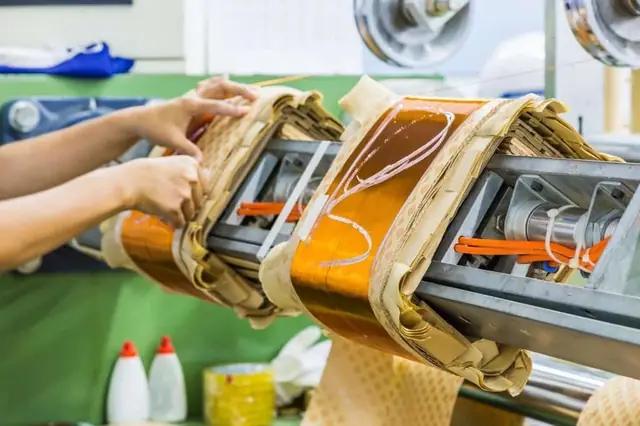
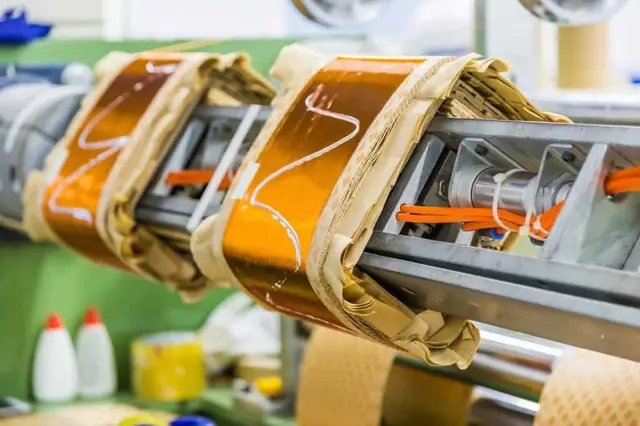
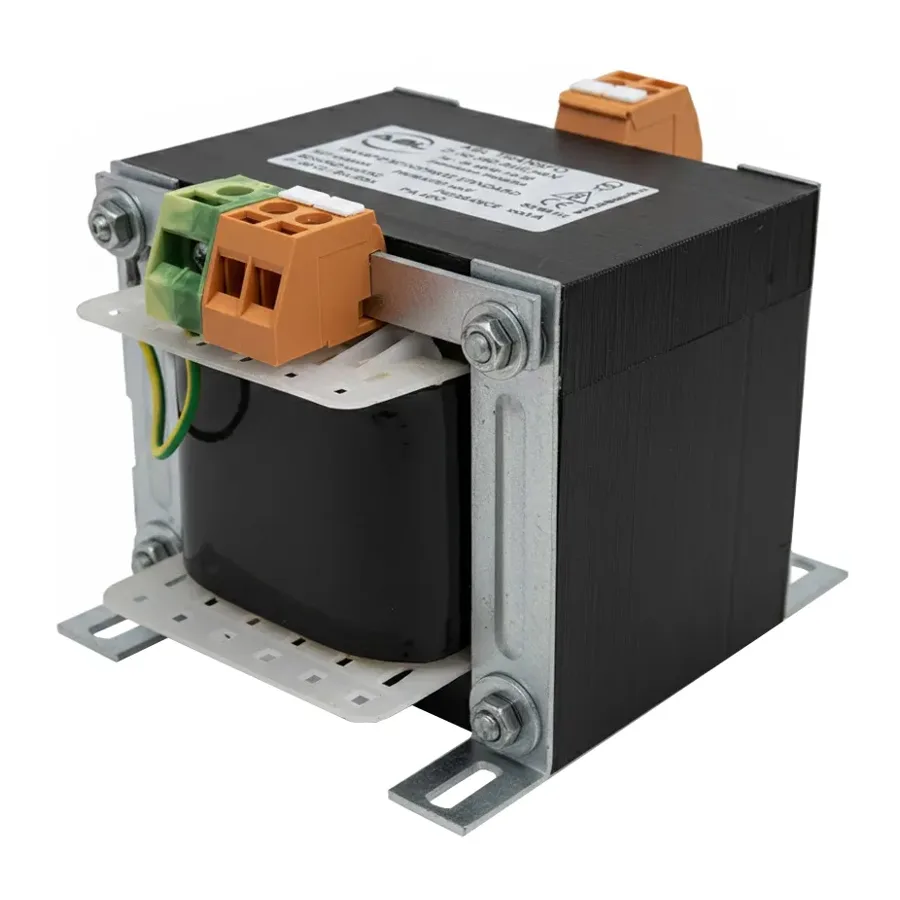
Single-phase isolation transformer 230 V / 230 V
Galvanic isolation, 1:1 ratio · 63 VA to 20 kVA · IP00, IP23 or IP54 · made in France
4.9 · 33 reviews63 VA0.27 A at 230 V
- —
- —
- 2-year warranty · wound and tested in Gailhan
Key features
This 230 V to 230 V isolation transformer galvanically separates your equipment from the mains: it takes in 230 V and delivers 230 V (1:1 ratio), but there is no electrical connection between the primary and the secondary. It is also known as a 230 V isolating transformer. It is used to isolate a boiler, audio equipment, a repair bench or a machine from the supply that feeds it. From 63 VA to 20 kVA, open frame (IP00), with a ventilated cover (IP23) or in a sealed housing (IP54): it is wound and tested in our workshop in Gailhan, in the Gard (southern France).
Some boiler control boards monitor the flame relative to neutral and earth: a voltage between neutral and earth, or a supply without an earth-referenced neutral, is enough to lock them out. Supplied through this isolation transformer, the boiler gets an earth-referenced neutral again if one secondary terminal is connected to earth. Have the connection checked by your electrician or heating engineer.
That is normal: about 243 V off load on the 63 VA, 237 V on the 1,000 VA. The voltage comes back to 230 V when the transformer delivers its rated current. The difference is smaller on larger ratings.
To supply a circuit protected at 16 A, allow 16 × 230 = 3,680 VA: the 4 kVA isolation transformer is suitable. The calculator above the table works this out from the power of your equipment.
When should you use a 230 V isolation transformer?
- Boilers whose electronics need an earth-referenced neutral, with no voltage between neutral and earth.
- Audio and hi-fi equipment: breaking earth loops and noise carried by the mains.
- Repair benches and test benches: working on equipment isolated from the mains.
- Machines and control systems whose leakage currents trip the RCD.
- An electrical section separated from the rest of the installation, with or without insulation monitoring, as the installer decides.
- Supplies without an earth-referenced neutral: recreating an earthed neutral for a single-phase appliance.
It works on 50 and 60 Hz supplies. It neither steps the voltage up nor down: to change voltage, see the range below.
Specifications of the 230 V / 230 V isolation transformer
Values for the selected configuration: 63 VA · IP00.
- Voltage
- 230 V AC (formerly 220 V)
- Rated current
- —
- Terminals
- 1 (0 V) · 2 (230 V) · earth
- Recommended protection
- —
- On-load voltage
- 230 V AC
- No-load voltage
- —
- Rated current
- —
- Terminals
- 3 (0 V) · 4 (230 V)
- Recommended protection
- —
- Type
- Dry-type transformer, two separate windings
- Core
- EI laminations, flux density 1.2 T
- Insulation class
- H (180 °C)
- Temperature rise
- 50 °C, 40 °C maximum ambient
- Standards
- EN 61558-2-4 (isolating transformers)
- Electrostatic shield
- Fitted as standard, earthed
- Thermal protection
- On request
- IP rating
- —
- Overall dimensions L × W × H
- —
- Weight
- —
- Mounting
- —
- Altitude
- 3,000 m maximum
- Connection
- Screw terminals up to 55 A (10 kVA on this model), lugs above
From 10 to 20 kVA, losses and efficiency are available on request.
Ratings and prices
From 63 VA to 20 kVA. Above that, or for another voltage, on request.
| Rating | 230 V current | Primary fuse | 230 V protection | No-load / load losses | Efficiency | Weight | Dimensions (mm) | Price ex VAT |
|---|---|---|---|---|---|---|---|---|
| 63 VA | 0.3 A | aM 2 A | aM 2 A | 2 / 3.4 W | 92.1 % | 1.5 kg | 75 × 68 × 73 | €47.42 |
| 100 VA | 0.4 A | aM 2 A | aM 2 A | 3 / 5.2 W | 92.0 % | 2 kg | 84 × 82 × 78 | €57.42 |
| 160 VA | 0.7 A | aM 2 A | aM 2 A | 4 / 8.5 W | 91.9 % | 2.5 kg | 96 × 89 × 87 | €63.25 |
| 200 VA | 0.9 A | aM 2 A | aM 2 A | 5 / 8.9 W | 93.0 % | 2.6 kg | 118 × 97 × 97 | €66.58 |
| 250 VA | 1.1 A | aM 2 A | aM 2 A | 5 / 12 W | 93.2 % | 3.9 kg | 108 × 95 × 100 | €78.25 |
| 300 VA | 1.3 A | aM 2 A | aM 2 A | 6 / 12.2 W | 94.0 % | 4 kg | 108 × 103 × 94 | €80.75 |
| 400 VA | 1.7 A | aM 2 A | aM 2 A | 8 / 15 W | 94.2 % | 6 kg | 126 × 122 × 108 | €102.42 |
| 500 VA | 2.2 A | aM 4 A | aM 4 A | 9 / 15 W | 95.2 % | 6.8 kg | 126 × 110 × 115 | €112.42 |
| 630 VA | 2.7 A | aM 4 A | aM 4 A | 12 / 22.9 W | 94.4 % | 9 kg | 150 × 124 × 126 | €132.42 |
| 750 VA | 3.3 A | aM 4 A | aM 4 A | 15 / 24.1 W | 94.8 % | 10.3 kg | 150 × 120 × 135 | €144.92 |
| 1 kVA | 4.3 A | aM 6 A | aM 6 A | 18 / 28.1 W | 95.4 % | 14 kg | 150 × 144 × 127 | €175.75 |
| 1.6 kVA | 7.0 A | aM 8 A | aM 8 A | 19 / 47.2 W | 95.9 % | 16.4 kg | 180 × 140 × 160 | €219.92 |
| 2 kVA | 8.7 A | aM 10 A | aM 10 A | 19 / 59.4 W | 96.1 % | 20 kg | 180 × 160 × 160 | €243.25 |
| 2.5 kVA | 10.9 A | aM 12 A | aM 12 A | 24 / 67.7 W | 96.3 % | 24 kg | 180 × 180 × 150 | €250.75 |
| 3 kVA | 13.0 A | aM 16 A | aM 16 A | 29 / 126.8 W | 94.8 % | 29 kg | 180 × 200 × 160 | €288.25 |
| 4 kVA | 17.4 A | aM 20 A | aM 20 A | 42 / 102.1 W | 96.4 % | 33 kg | 240 × 190 × 220 | €425.75 |
| 5 kVA | 21.7 A | aM 25 A | aM 25 A | 45 / 118.3 W | 96.7 % | 36 kg | 240 × 200 × 220 | €458.25 |
| 6.3 kVA | 27.4 A | aM 32 A | aM 32 A | 56 / 127.8 W | 97.1 % | 40 kg | 240 × 210 × 220 | €483.25 |
| 7.5 kVA | 32.6 A | aM 40 A | aM 40 A | 56 / 162.1 W | 97.1 % | 46 kg | 240 × 230 × 220 | €548.25 |
| 8 kVA | 34.8 A | aM 40 A | aM 40 A | —* | —* | 59 kg | 240 × 230 × 220 | €622.42 |
| 10 kVA | 43.5 A | aM 50 A | aM 50 A | —* | —* | 75 kg | 390 × 150 × 470 | €1,012.42 |
| 15 kVA | 65.2 A | aM 80 A | aM 80 A | —* | —* | 80 kg | 390 × 160 × 470 | €1,145.75 |
| 20 kVA | 87.0 A | aM 100 A | aM 100 A | —* | —* | 95 kg | 390 × 170 × 470 | €1,279.92 |
aM fuses sized for the rated current; alternatively, a type D circuit breaker of the same rating. * 10 to 20 kVA: catalogue weights and dimensions, losses on request.
Connection and dimensions
Extracts from the datasheet: diagram, terminal block and dimensions.
PDF · specifications, ratings and part numbers, protection
Primary protection
—
—
230 V protection
—
As close as possible to the transformer, on the 230 V outgoing circuit.
Safety
- Connection with the power off, by a qualified person.
- Earth connected before switching on.
- IP00: inside a closed cabinet or enclosure.
Standards, warranty and options
A standard transformer, made in Gailhan and also available in other voltages.
Frequently asked questions
About the 230 V / 230 V single-phase isolation transformer.
What is a 230 V to 230 V isolation transformer for?
To galvanically separate a device or circuit from the supply that feeds it, without changing the voltage: 230 V in, 230 V out, but no electrical connection between the two. It protects against faults carried over from the mains and lets you choose the earthing arrangement on the secondary.
Isolation transformer or isolating transformer: what is the difference?
None: standard EN 61558-2-4 calls it an “isolating transformer”. A 220 V to 220 V transformer is the same unit: 220 V is the former name for 230 V.
Why use an isolation transformer for a boiler?
Because some boiler control boards go into lockout when there is a voltage between neutral and earth, or when the neutral is not earth-referenced. On the transformer secondary, a terminal connected to earth becomes an earth-referenced neutral. Every installation is different: have the connection made by a qualified electrician.
Which rating should I choose?
Add up the power of the equipment supplied, multiply by 1.25 and take the next rating up: a 150 W boiler needs 188 VA, so a 200 VA transformer. For a circuit protected at 16 A, allow 3,680 VA, so a 4 kVA transformer. The calculator above the table does this for you.
Why do I measure more than 230 V on the secondary?
Off load, the voltage is slightly higher: about 243 V on the 63 VA and 237 V on the 1,000 VA. It comes back to 230 V when the transformer delivers its rated current: this is what compensates for the internal voltage drop.
How do I connect a 230 V to 230 V isolation transformer?
The supply goes to primary terminals 1 and 2, and earth to the earth terminal; the equipment is fed from secondary terminals 3 and 4. Whether or not to connect one secondary terminal to earth depends on the application: it is the installer's choice. The connection diagram is on the datasheet.
Should the secondary be connected to earth?
With one terminal connected to earth, the secondary provides an earth-referenced neutral and the downstream RCD works (the case for boilers). Left isolated, it provides electrical separation: a first earth fault does not cause a dangerous current to flow. The choice rests with the installer, in line with IEC 60364 (NF C 15-100 in France).
What protection should I install?
On the primary, an aM fuse or a type D circuit breaker rated for the primary current: 2 A for the 63 VA, 6 A for the 1,000 VA. On the secondary, the protection of the equipment supplied. At switch-on, the transformer draws about twelve times its rated current; the protection rating for each size is given in the table.
IP00, IP23 or IP54: which should I choose?
IP00: open-frame transformer, to be installed in a cabinet or enclosure. IP23: ventilated cover, for a dry room. IP54: moulded housing up to 630 VA, sealed enclosure above that, protected against dust and splashing water. All about IP ratings.
Is an isolation transformer suitable for medical use?
No: medical locations require transformers complying with EN 61558-2-15, with reinforced insulation and limited leakage currents. This isolation transformer falls under EN 61558-2-4. Tell us what you need for a specific unit.
Customer reviews
Reviews posted by customers who bought this transformer (in French).
J'ai fait l'acquisition d'un tranformateur d'isolement pour l'intaller à l'alimentation de ma chaîne hifi. La mise en oeuvre récente d'un système de climatisation à mon domicile engendrait un "sifflement" (donc haute fréquence) dans mes haut-parleurs. J'avais consulté des forums. Beaucoup de spécialistes indiquaient qu'un transformateur d'isolement est conçu pour isoler galvaniquement et donc était dédié à l'aspect sécurité électrique mais laissait passer toutes les perturbations du primaire. D'autres indiquaient que brancher la masse issue du primaire au Neutre du secondaire rendait caduque l'isolement (sur ce point, ils ont fort probablement raison. Tout dépends du but recherché en fait). Moi je dis: rien de telle que l'expérimentation. J'ai donc un transformateur du fabriquant français ABL Transfo, 230V-230V 650VA pour alimenter une chaîne hifi composée entre-autres d'un step-up (transformateurs augmentant la tension des cellules phono à bobine mobile...très sensibles ces petites bêtes-là) et un ampli à lampe, le tout consommant 350W grand max (la puissance du tranformateur d'isolement doit être choisie judicieusement..voir sur le site d'ABL Transfo). J'ai fait l'essai sans brancher la masse (terre) du primaire sur le neutre du secondaire: les perturbations haute-fréquences étaient toujours présentes. Avec la masse raccordée, oh miracle, les sifflements ont disparus. Je peux écouter ma musique en mettant à fond la clim! Bref, mon but est atteint, je suis très content de mon achat, achat qui est loin de m'avoir ruiné. Pour information, j'ai mesuré la consommation à vide du transformateur (eh oui, le primaire est branché en permanence sur le secteur , il y a donc consommation de courant même s'il n'y a aucune "demande" au secondaire), résultat: 12wh. Calculs fait cela représente 21€ par an au tarif EDF 2026. Et 21€ pour un plaisir d'écoute retrouvé, moi je prends. Il faut aussi penser à installer le tranfo dans un endroit pas trop confiné. Les 12w sont dissipés au moins partiellement en chaleur, ça reste léger, mais il faut le laisser respirer."
Le transformateur d'isolement sortait plus de tension qu'il n'y en entrait... L'équipe a été réactive pour répondre à mes questions et a su trouver une solution afin d'installer de manière fonctionnelle le transformateur. Il joue désormais parfaitement son rôle d'isoler ma chaudière du reste du circuit électrique.
Suite à un petit problème lors de la commande j'ai téléphonè au service client. Je remercie Sylvie pour son écoute et sa disponibilité. J'ai reçu mon transfo sous 48h. dans un emballage résistant. Le transfo fonctionne depuis. Je recommande sans réserve cette entreprise.
Très bonne qualité, prix juste, livraison très rapide. Merci de votre contact téléphonique pour vérifier si ma commande correspondait bien à l'utilisation que je devais en faire. Je recommande ABL.
Grâce à se transfo d’isolement, j’ai enfin pu mettre fin aux déclenchements intempestifs du disjoncteur différenciel sur défaut mise à la terre que j’avais avec l’alimentation de mes portails.
Je ne l'ai pas encore utilisé ; j'attends le passage de mon ami pour le mettre en place. D'où ma note...
Other isolation transformers
Toroidal, three-phase and other voltages.